

Healthy, High Fiber Foods That Make Eating Well Feel Easy
Getting enough fiber every day is one of the simplest ways to support your long-term health—yet most of us fall short. Fiber helps keep digestion regular, supports a healthy gut microbiome, stabilizes blood sugar, and helps you feel full longer. In other words: eating more fiber is one of those small habits that makes your whole day feel better.
Disclosure: This post contains affiliate links. As an Amazon Associate, I earn from qualifying purchases, at no extra cost to you.
This guide breaks down:
Why fiber matters
How much fiber to aim for
The difference between soluble and insoluble fiber
A high-fiber foods list with fiber grams per serving
Easy ways to hit your daily fiber goals
👉 Looking for meal inspiration too? Visit Our Favorite High Fiber Recipes Pinterest Board for smoothies, bowls, snacks, and cozy high-fiber meals.
Check out one of our favorite high fiber breakfast recipes: Applesauce Oatmeal Cookies.
❤️ Why Fiber Is So Important for Your Health
Fiber isn’t digested like other nutrients. Instead, it moves through your digestive system, supporting your body in amazing ways. These are some of the proven benefits of sufficient fiber intake:
Regularity and easier digestion
Balanced blood sugar and fewer energy crashes
Healthy cholesterol levels
Feeling full and satisfied between meals
A more diverse, resilient gut microbiome
Hormone and metabolic health over time
The problem: most adults get far less fiber than they need. The good news is that you don’t have to track obsessively. Once you know which foods are naturally high in fiber, it becomes easy to build them into your normal routine.
🎯 How Much Fiber Should You Aim For?
To keep this simple and approachable, here are three fiber goal levels you can choose from. Pick the one that fits where you are right now and gradually work your way up.
🥇 High Fiber Goal – ~50 grams per day
This is an ambitious, feel-amazing target that supports gut health, satiety, blood sugar, and long-term wellness. You’ll likely hit this if you’re regularly including:
Chia or flax seeds
Beans and lentils
Plenty of vegetables
High-fiber fruits
Whole grains like oats, barley, and quinoa
🥈 Medium Fiber Goal – ~35 grams per day
A great, realistic target for most people. You’ll notice benefits for digestion, fullness, and energy with this range.
🥉 Gentle Start Fiber Goal – ~25 grams per day
If your current diet is lower in fiber, start here. Increase slowly, drink plenty of water, and give your body time to adjust. Once 25 grams feels easy, you can nudge toward the 35–50 gram range.
🌱 Soluble vs Insoluble Fiber: What’s the Difference?
All fiber is helpful, but it comes in two main types that do slightly different jobs.
Soluble Fiber
Dissolves in water and forms a gel-like texture in the gut
Helps stabilize blood sugar by slowing digestion
Can help lower LDL (“bad”) cholesterol
Helps you feel full and satisfied longer
Feeds beneficial gut bacteria
Foods rich in soluble fiber:
Oats, chia seeds, ground flaxseed, beans, lentils, split peas, apples, pears, avocado, barley.
Insoluble Fiber
Does not dissolve in water
Adds bulk to stool
Helps food move more quickly through the digestive tract
Supports regularity and helps prevent constipation
Foods rich in insoluble fiber:
Vegetables (broccoli, carrots, Brussels sprouts), whole grains, popcorn, nuts, seeds, and the skins of fruits and vegetables.
⚖️ What’s a Good Balance of Soluble and Insoluble Fiber?
There’s no strict daily requirement for each type, but a balanced mix works best.
A simple guideline:
Aim for roughly 1/3 soluble fiber and 2/3 insoluble fiber over the course of the day.
Most people naturally get more insoluble fiber (from grains and veggies), so focusing on soluble-rich foods like oats, chia, beans, and fruit helps balance things out.
Easy Golden Grown Rule of Thumb
For most meals, try to include:
1 soluble fiber food
(chia, oats, beans, lentils, apples, pears, avocado)1 insoluble fiber food
(vegetables, berries, whole grains, nuts, seeds)
This simple pairing keeps digestion happy, energy steadier, and fiber goals much easier to meet.
🥣 High-Fiber Foods Guide
Below is a list of high-fiber foods with the approximate grams of fiber per serving and whether they’re mostly soluble, insoluble, or a mix of both. Most plant foods contain some of each type; this table just reflects the dominant form.
| Food | Serving Size | Fiber (g) | Primary Fiber Type |
|---|---|---|---|
| Raspberries | 1 cup | 8 g | Insoluble-dominant |
| Blackberries | 1 cup | 7.6 g | Insoluble-dominant |
| Blueberries | 1 cup | 3.6 g | Mixed |
| Pear (skin on) | 1 medium | 5.5 g | Soluble + insoluble |
| Apple (skin on) | 1 medium | 4.5 g | Soluble + insoluble |
| Avocado | 1/2 medium | 5 g | Soluble-dominant |
| Chia seeds | 2 tbsp | 10 g | Soluble-dominant |
| Ground flaxseed | 2 tbsp | 4 g | Soluble-dominant |
| Psyllium husk | 1 tbsp | 5 g | Soluble-dominant |
| Oats | 1/2 cup dry | 4 g | Soluble-dominant (β-glucan) |
| Barley | 1 cup cooked | 6 g | Soluble-dominant (β-glucan) |
| Quinoa | 1 cup cooked | 5 g | Insoluble-dominant |
| Brown rice | 1 cup cooked | 3.5 g | Insoluble-dominant |
| Popcorn (air-popped) | 3 cups | 3.6 g | Insoluble |
| Lentils | 1/2 cup cooked | 8 g | Soluble + insoluble |
| Black beans | 1/2 cup cooked | 7.5 g | Soluble + insoluble |
| Kidney beans | 1/2 cup cooked | 6.8 g | Soluble + insoluble |
| Chickpeas | 1/2 cup cooked | 6 g | Soluble + insoluble |
| Split peas | 1/2 cup cooked | 8 g | Soluble-dominant |
| Edamame | 1 cup | 8 g | Mixed |
| Sweet potato (skin on) | 1 medium | 4 g | Mixed |
| Broccoli | 1 cup | 5 g | Insoluble-dominant |
| Brussels sprouts | 1 cup | 4 g | Insoluble-dominant |
| Carrots | 1 cup | 3.5 g | Soluble-dominant |
| Artichoke | 1 medium | 7 g | Mixed |
| Almonds | 1/4 cup | 4 g | Insoluble |
| Pistachios | 1/4 cup | 3 g | Insoluble |
| Pumpkin seeds | 1/4 cup | 3 g | Insoluble |
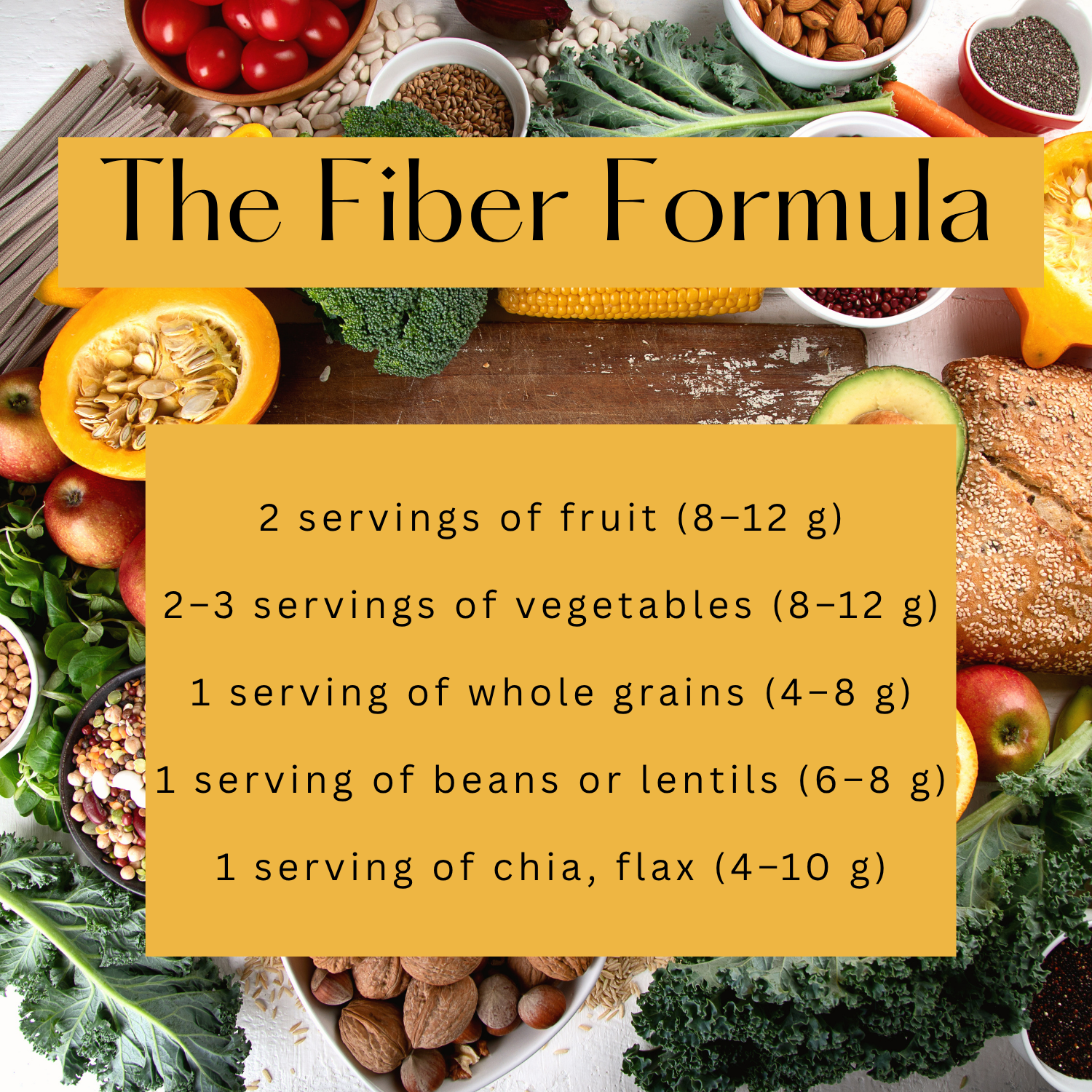
🧡 Your Easy Daily Fiber Formula
If you want a simple plan to get in the 25–50 grams of fiber range without tracking every bite, try this daily pattern:
2 servings of fruit (8–12 g)
2–3 servings of vegetables (8–12 g)
1 serving of whole grains (4–8 g)
1 serving of beans or lentils (6–8 g)
1 serving of chia, flax (4–10 g)
That naturally lands most people between 30–45 grams of fiber, and you can bump that toward 50 g by adding an extra scoop of beans, veggies, or seeds.
💧 A Quick Note
If you’re increasing your fiber significantly:
Go slowly over 1–2 weeks
Drink plenty of water
Listen to your body and adjust as needed
This helps minimize bloating and lets your digestive system adapt comfortably.
🛒 High-Fiber Staples (Great for Grocery Lists)
These are my favorite products to keep stocked because they make hitting fiber goals feel easy and realistic. I’ve compared labels of different brands of these items and found the fiber content can vary significantly. These are my favorite brands because they are organic, high quality, affordable, and high fiber:
Quinoa or barley
Popcorn kernels
Popped popcorn
Sweet potatoes
📌 Need Recipe Ideas?
If you’re thinking, “Okay, I bought the chia seeds and the beans… now what?”
Head over to Our Favorite High Fiber Recipes Pinterest Board for:
Breakfasts packed with oats, chia, and berries
Cozy soups and stews with beans and lentils
High-fiber snacks and desserts that still feel like a treat